Altyre Street, Glasgow
Recreating a street
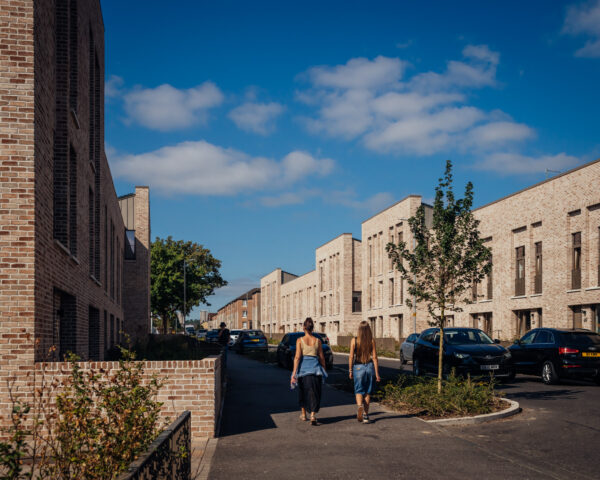
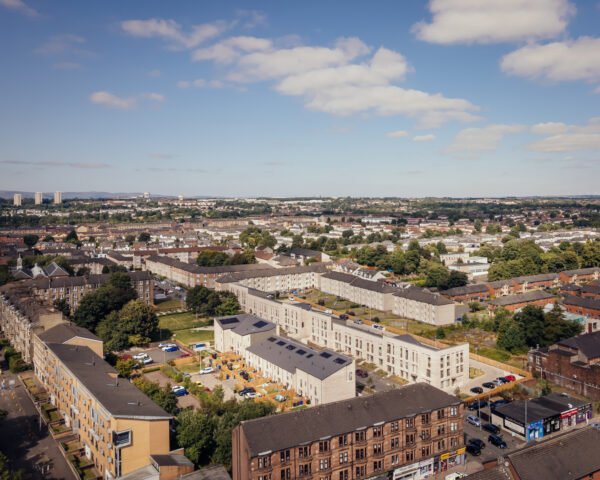
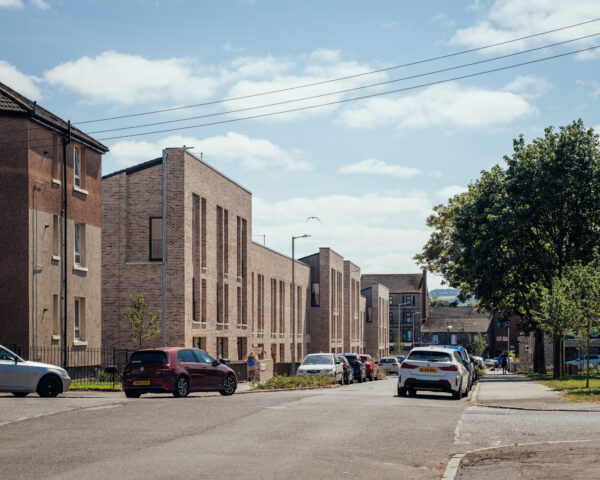
Completed in Spring 2026, Altyre Street is a new affordable housing development for Tollcross Housing Association, delivering 42 high-quality dual-aspect homes on a vacant brownfield site in Glasgow’s East End. The scheme provides a mix of flats and townhouses to address a critical local shortage of family housing. The project’s central ambition was to create a street, restoring a sense of identity and place through pedestrian-focused public realm, front gardens and active frontages. Designed to The Glasgow Standard and Secured by Design requirements, the development creates a generous, durable and joyful new neighbourhood, capable of supporting community life.
It’s great to see another brilliant new development completed by the Association. It’s such a demanding process for any Committee to deal with all the different aspects of a new build development, and it just seems to keep getting harder and harder. But we’re absolutely determined to keep working to ensure that everyone has a decent house. The design team and contractor have done a brilliant job delivering this high-quality scheme, on what was a really difficult site. We can’t thank them enough for the skill, flair, hard work and dedication they’ve all committed to the project.”
Chairperson, Tollcross Housing Association
It’s great to see another brilliant new development completed by the Association. It’s such a demanding process for any Committee to deal with all the different aspects of a new build development, and it just seems to keep getting harder and harder. But we’re absolutely determined to keep working to ensure that everyone has a decent house. The design team and contractor have done a brilliant job delivering this high-quality scheme, on what was a really difficult site. We can’t thank them enough for the skill, flair, hard work and dedication they’ve all committed to the project.”
Chairperson, Tollcross Housing Association
Brief
Page\Park was appointed by Tollcross Housing Association in 2018 to undertake a feasibility study on a brownfield site that had been vacant for over a decade. The appointment subsequently extended through all RIBA stages, with Page\Park acting as Lead Designer, Contract Administrator and Principal Designer.
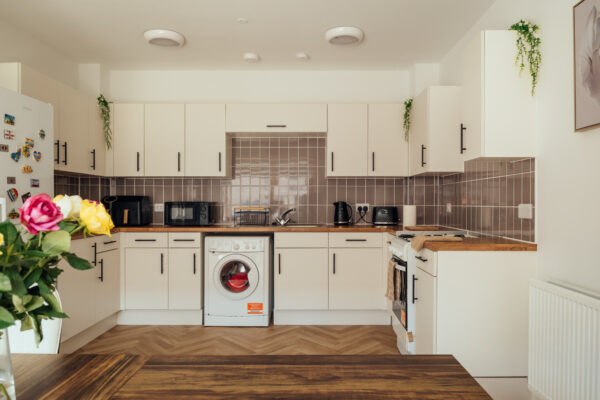
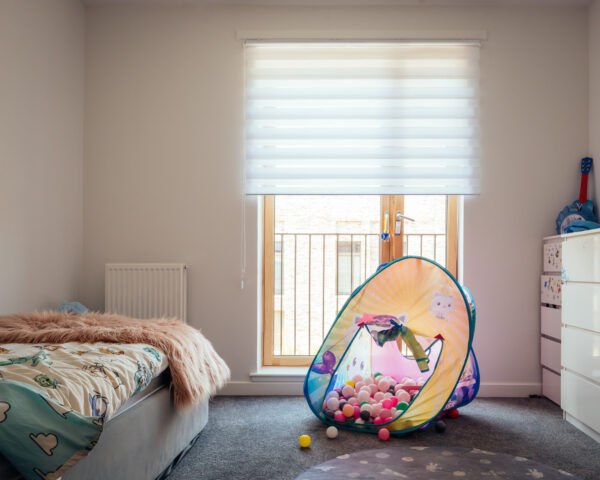
The client brief responded to an acute local demand for affordable family housing. Emphasis was placed on delivering larger six and eight-person homes, mixed with smaller units, while ensuring all homes met The Glasgow Standard Design criteria and Secured by Design requirements. The brief was to provide high-quality homes with good natural daylight, generous storage, attractive outlooks, and spaces that are comfortable, affordable to heat and enjoyable to live in.
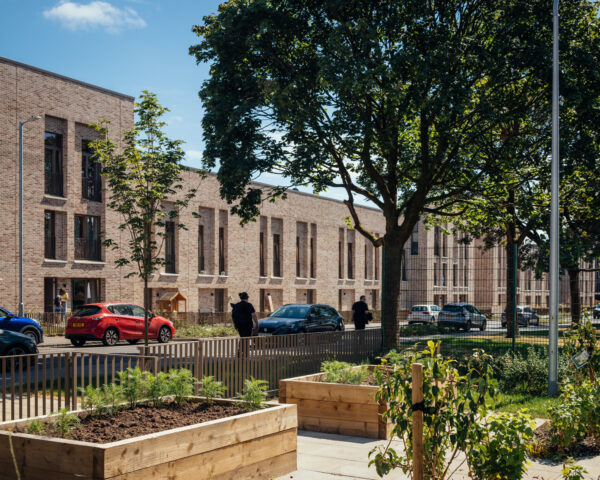
Beyond housing provision, the client aspired to repair a neglected urban site and create a settled, family-friendly neighbourhood. Community-focused amenities, including a children’s play area, kickabout pitch and community garden, were included in the brief to encourage social interaction and support the development of a strong and inclusive community.
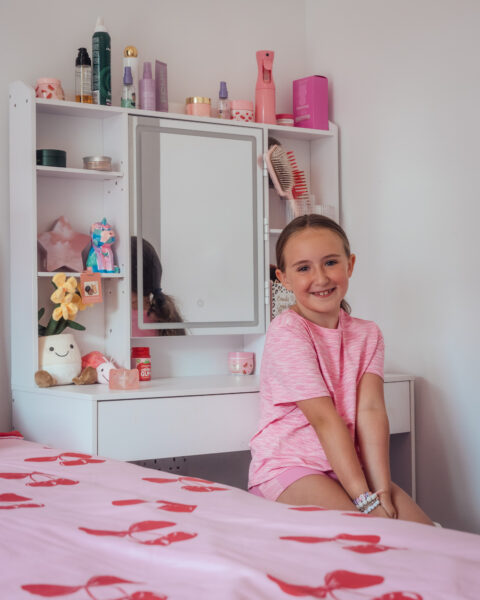
I'm delighted with my move, the peace it has brought to my two children having their own rooms is night and day from before! The house is beautiful, and the street is full of kids to play with each other, it makes it better for my wee girl!”
New resident on Altyre Street, and mum of two
I'm delighted with my move, the peace it has brought to my two children having their own rooms is night and day from before! The house is beautiful, and the street is full of kids to play with each other, it makes it better for my wee girl!”
New resident on Altyre Street, and mum of two
Housing mix
The housing mix comprises 42 dual-aspect homes ranging from one-bedroom flats to four-bedroom townhouses. Four homes were designed as wheelchair-adaptable units, incorporating provision for future hoists, enhanced storage and raised socket positions.
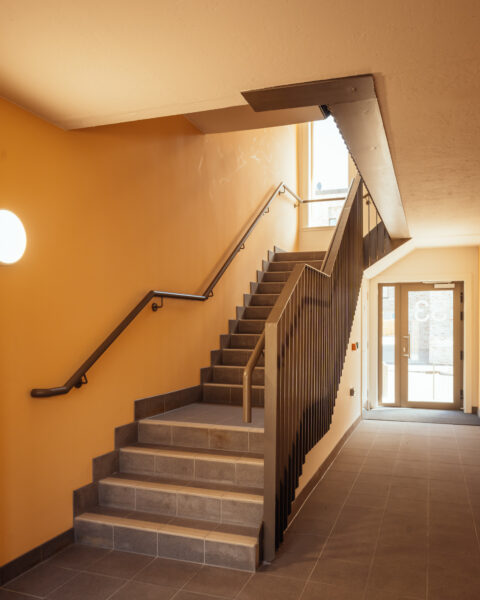
Delivering this varied mix within a constrained funding envelope required inventive design. Homes were planned to meet Glasgow Standard requirements and different unit types were efficiently stacked within closes. Limited opportunities for repetition, given the variety of the mix, demanded imaginative layouts that balanced value, functionality and structural consistency.
The development provides family housing, accessible homes, community facilities and sustainable infrastructure, including Sustainable Urban Drainage Systems (SuDS), photovoltaic panels and EV charging, fulfilling the client’s ambitions for quality, durability, accessibility and placemaking.
It takes real skill to produce the design standards achieved at Altyre Street within the tight funding constraints that Associations are confined by. The tenants, Committee Members and staff team have been completely blown away by the quality of our latest new build development.”
Chief Executive, Tollcross Housing Association
It takes real skill to produce the design standards achieved at Altyre Street within the tight funding constraints that Associations are confined by. The tenants, Committee Members and staff team have been completely blown away by the quality of our latest new build development.”
Chief Executive, Tollcross Housing Association
Delivering quality
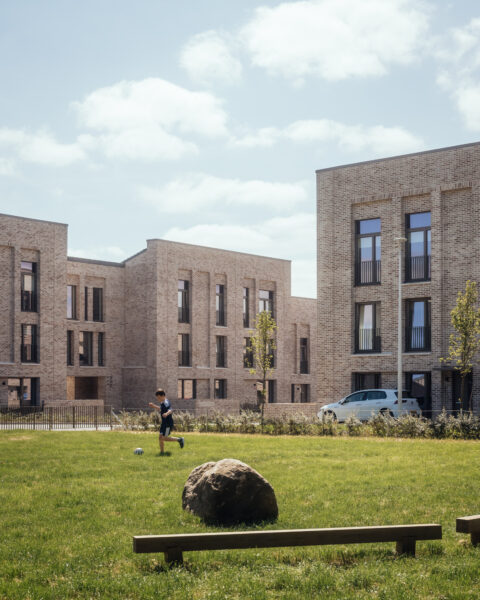
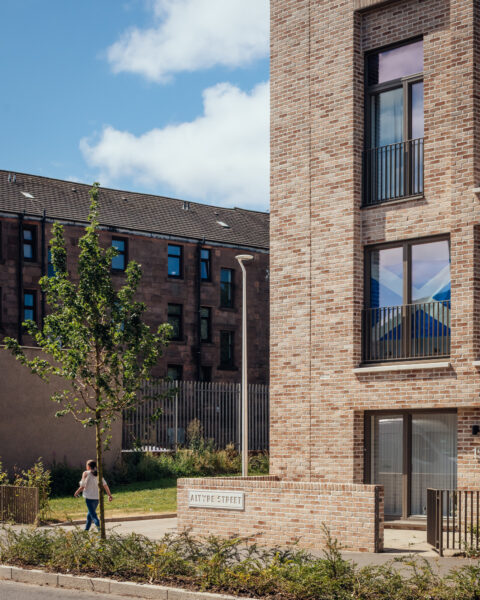
The primary objective of the architectural response is to make a street. The layout prioritises people over vehicles, reducing road widths and widening pavements with integrated planting to create an attractive and pedestrian-focused environment. Parking is located to the rear of plots, allowing homes rather than cars to shape the character of the public realm.
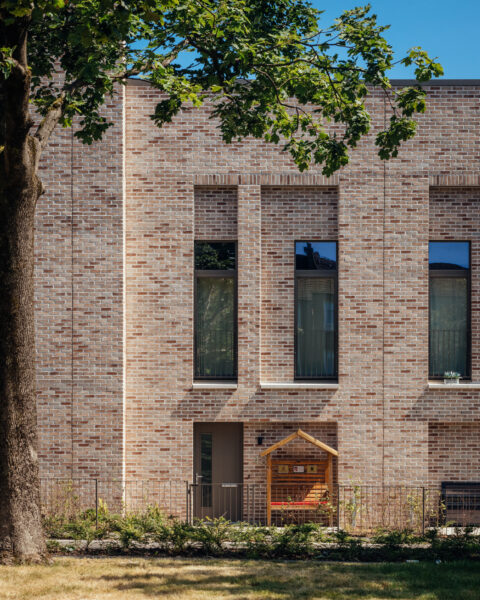
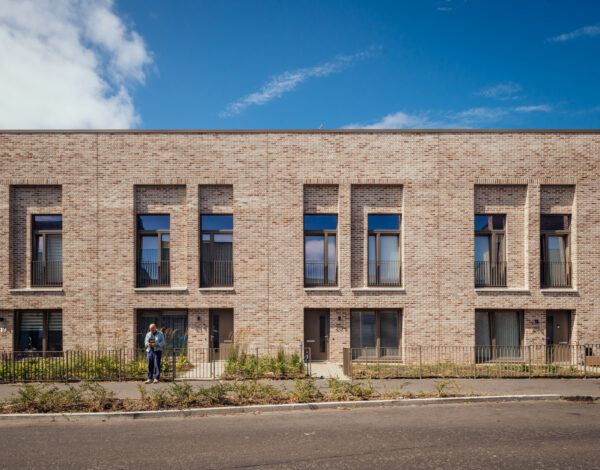
Each home has a front garden and gate, reinforcing a clear threshold between public and private space. Large ground-floor windows animate the street frontage and provide natural surveillance, helping to create a welcoming and secure environment.
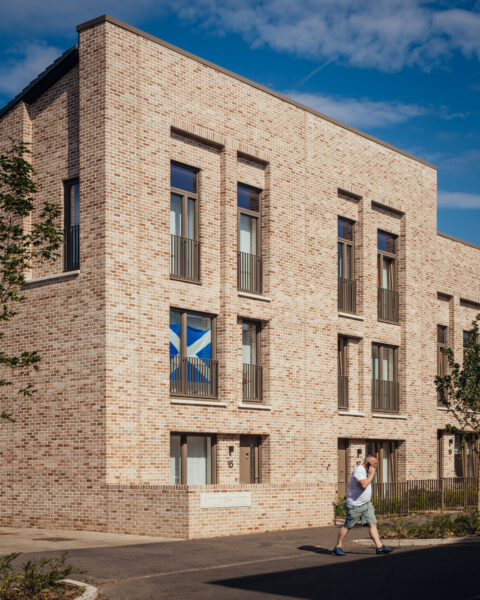
The architectural language is deliberately robust and enduring. Large window openings and deep brick reveals create a sense of weight and permanence. A restrained palette of concrete brick, precast cills, Juliet balconies and aluminium-clad windows balances durability, quality and value; refined yet buildable architecture. Behind the elevations, a highly efficient timber-frame structure supports modern methods of construction and rapid assembly. Sustainability measures include high-performance fabric standards, photovoltaic panels to all roofs and EV charging provision.
The result is a distinctive, durable and community-focused neighbourhood that transforms a challenging brownfield site into a settled and lived-in place.
Project Info
Overview
Tollcross Housing Association
Glasgow
£10.8m
4280m2
May 2026
Consultants
Fairhurst
RaeburnFarquharBowen
Reids
Principal CDM
McTaggart Construction
Jim Stephenson
Carbon Futures
More projects

North Gate
A new landmark gateway to the Gorbals

Parkview
Two residential courtyards with gable frontages overlooking the River Tay

The White House
A private house on the edge of the Solway Firth

166 Gorbals Street
Conservation of the last remaining listed building of the old Gorbals in Glasgow

Kilsyth Road
New Affordable Housing in a Rural Context