Teviot Row House
A conservation-led transformation of the world’s oldest purpose-built student union
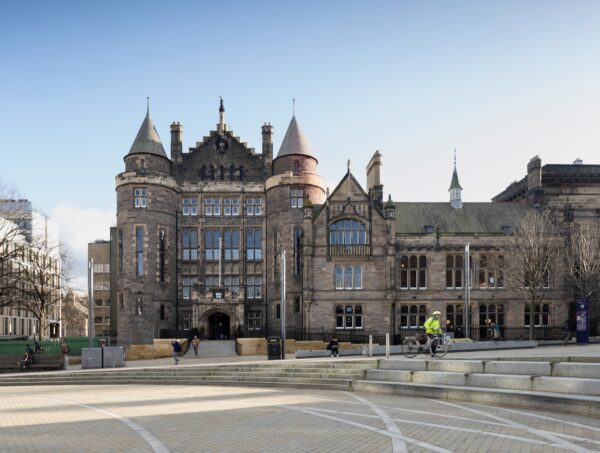
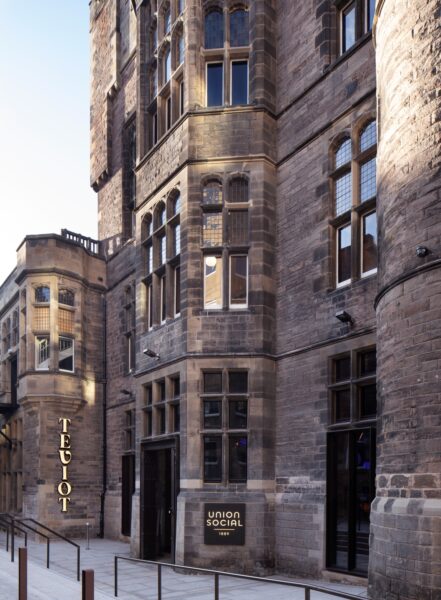
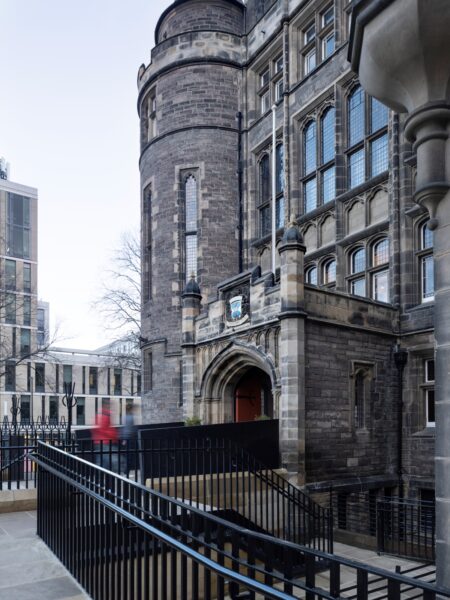
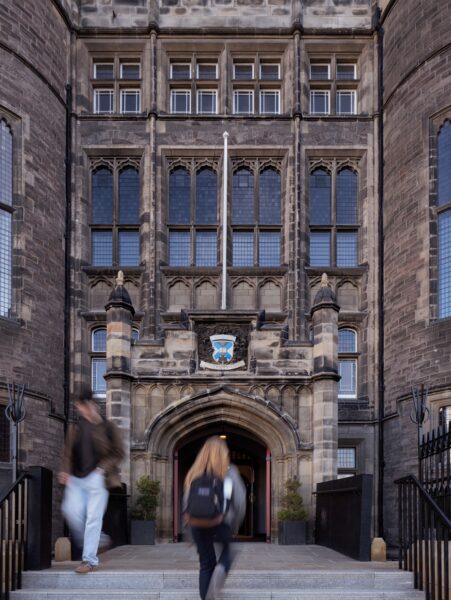
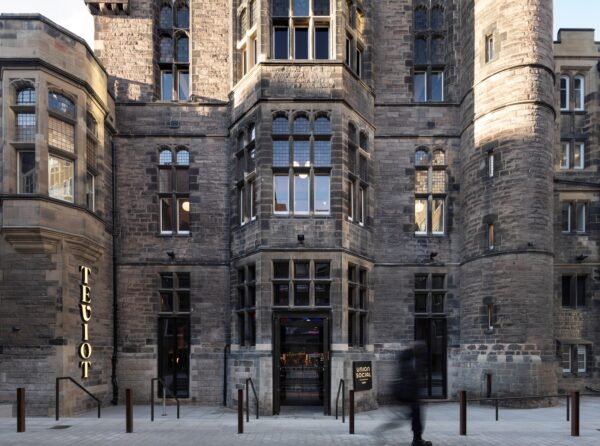
Teviot Row House stands at the heart of student life at the University of Edinburgh and is widely recognised as the world’s oldest purpose-built student union. Completed in 1889 to designs by Sydney Mitchell and Wilson, the Category B-listed building has evolved through successive extensions in 1902–05 and 1962, resulting in a complex and characterful architectural composition shaped by more than a century of student use.
The comprehensive refurbishment secures the long-term future of this culturally significant building through a conservation-led retrofit strategy that retains and repairs the vast majority of its historic fabric while adapting it to meet contemporary expectations of accessibility, environmental performance and flexibility.
A layered civic building
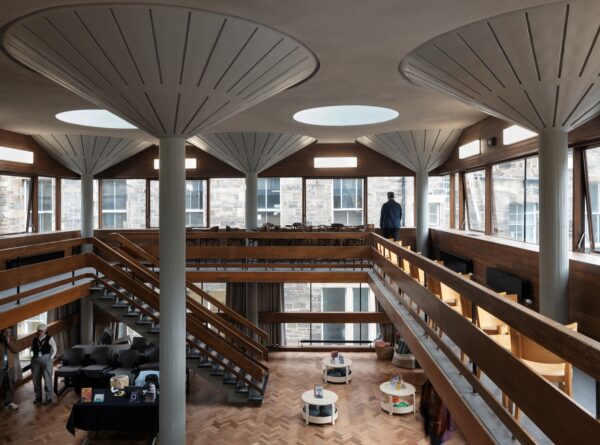
Teviot Row House has developed incrementally in response to changing patterns of student life, creating a rich but complex sequence of spaces. The original Scots Renaissance building was conceived as a social counterpart to the university’s academic environment, providing spaces for debate, gathering and performance. Later extensions expanded this programme, culminating in the bold Modernist addition by Anderson, Kininmonth and Paul in 1962.
Rather than seeking to simplify or homogenise these different phases, the project embraces the building as a layered architectural composition. Each period is understood as part of an ongoing narrative, informing a calibrated and carefully differentiated approach to repair, adaptation and environmental upgrade.

Conservation and repair
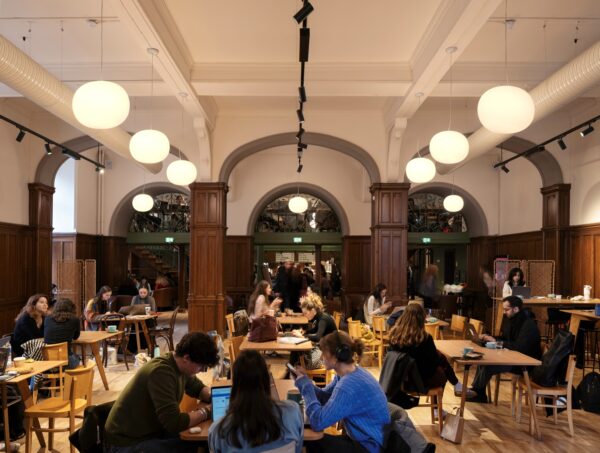
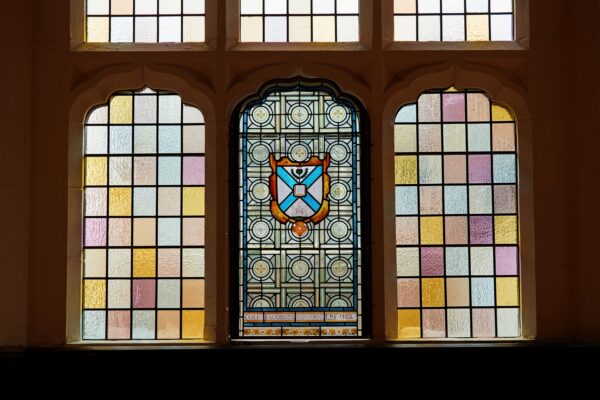
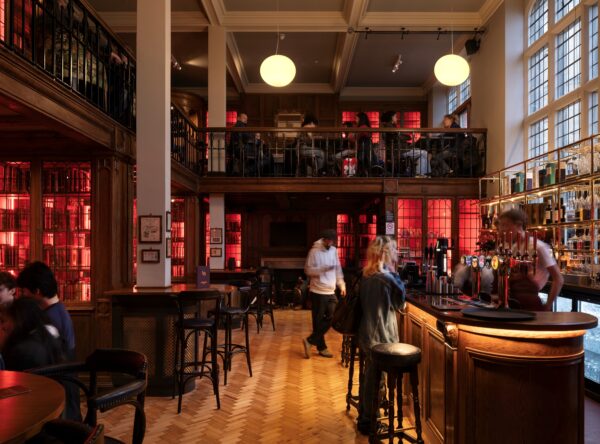
A conservation-led methodology guided all aspects of the refurbishment. The project prioritised the retention and repair of significant interiors, including timber panelling, ornamental plasterwork, leaded glass and terrazzo floors, ensuring that the craftsmanship embedded within the building remains visible and legible.
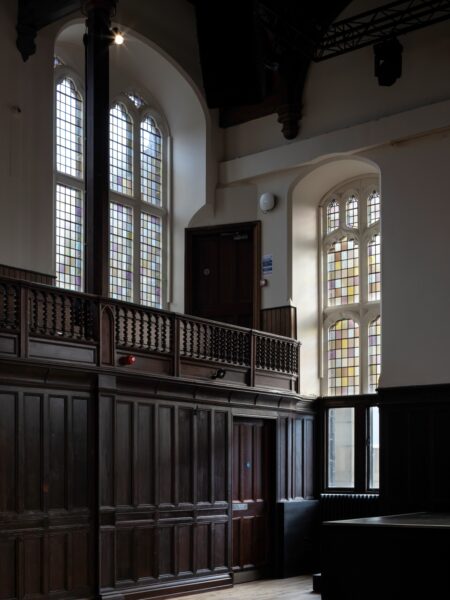
Historic spaces such as the Debating Hall and Library Bar were restored to support contemporary use while safeguarding their architectural character. Where previous alterations had obscured or compromised historic fabric, later accretions were selectively removed to reveal original spatial qualities and reinstate the hierarchy of principal rooms.
This repair-first approach preserves the embodied carbon already invested in the building while maintaining the qualities that make Teviot Row House an enduring part of the university’s identity.
Contemporary interventions as a new layer
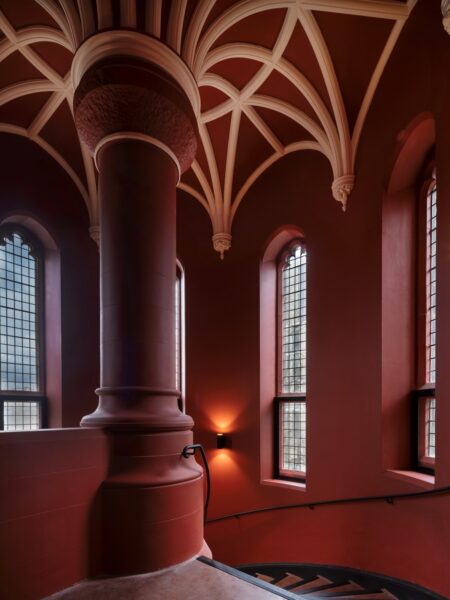
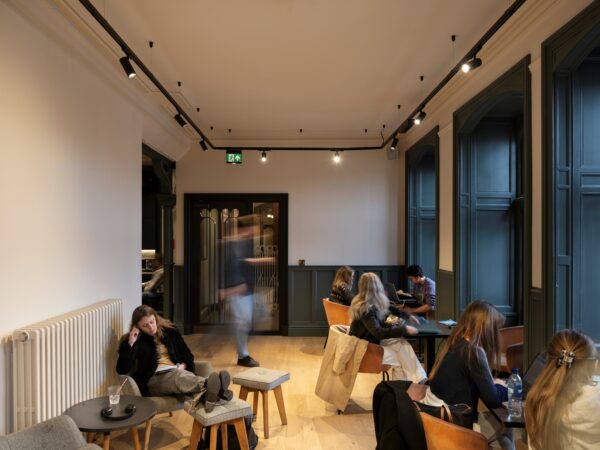
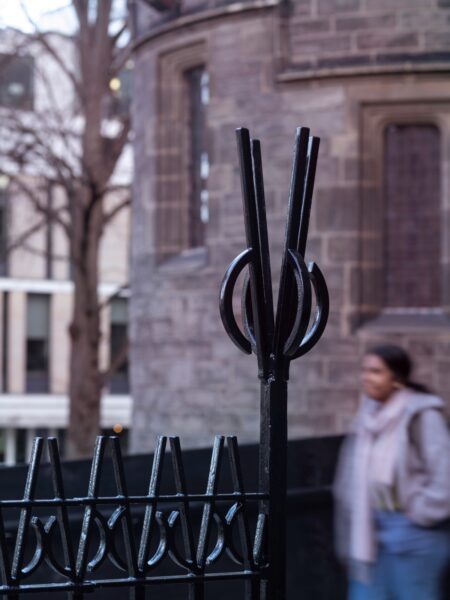
New architectural elements are introduced as a light and legible layer within the historic fabric. Contemporary metalwork, new stair elements and reconfigured entrances are expressed in a restrained but clearly contemporary language, allowing them to be distinguished from earlier fabric while remaining respectful of scale, material and context.
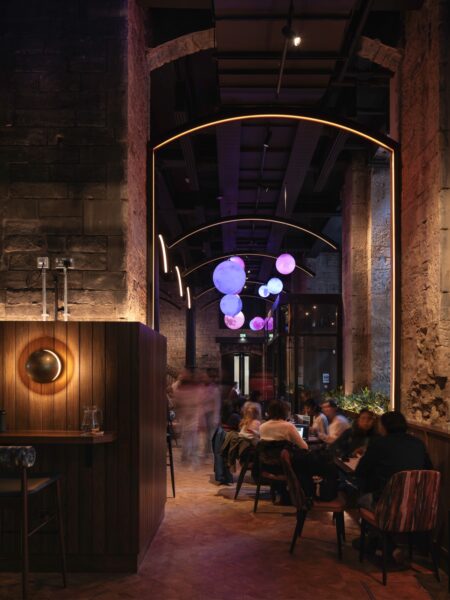
By focusing interventions within less significant areas of the building, including the former nightclub and sports bar, the project is able to accommodate new uses and circulation routes while protecting the most historically sensitive interiors.
This approach allows Teviot Row House to continue evolving in response to changing needs while maintaining the clarity of its architectural history.
Re-establishing spatial clarity
Decades of incremental change had resulted in fragmented circulation and underused spaces. The design focuses on carefully targeted interventions that reconnect previously isolated areas and create clearer, more intuitive routes through the building.
A new north–south circulation spine links Bristo Square with Charles Street Lane, improving permeability and re-establishing relationships between ceremonial, social and performance spaces. Former nightclub and sports bar areas have been opened up and reconfigured to create new social and commercial spaces that support more continuous use throughout the day and evening.
These spatial changes are achieved through surgical structural openings and the removal of later partitions, avoiding large-scale alteration while significantly improving the legibility and usability of the building.
Accessibility and inclusion
Improving accessibility was central to the project. Historically, level changes and complex circulation routes restricted access to many parts of the building, with wheelchair users reliant on a secondary side entrance requiring staff assistance.
A new external ramp integrated into the Bristo Square elevation now provides assistance-free access through the principal entrance for the first time in the building’s history. A further entrance from Charles Street Lane improves permeability across the site and strengthens connections with the wider Central Area campus.
Internally, a new lift and rationalised circulation routes enable the majority of the building to be accessed step-free, supported by improved sanitary provision and inclusive facilities. Together, these interventions remove long-standing physical and social barriers, ensuring that the building can be used equitably by the diverse student community it serves.
Retrofit and environmental performance
The refurbishment demonstrates how environmental improvement can be achieved through the careful adaptation of historic fabric. Interventions were calibrated to the technical potential and heritage value of each part of the building, with deeper thermal upgrades focused within the 1962 extension and lighter-touch measures applied to more sensitive Victorian fabric.
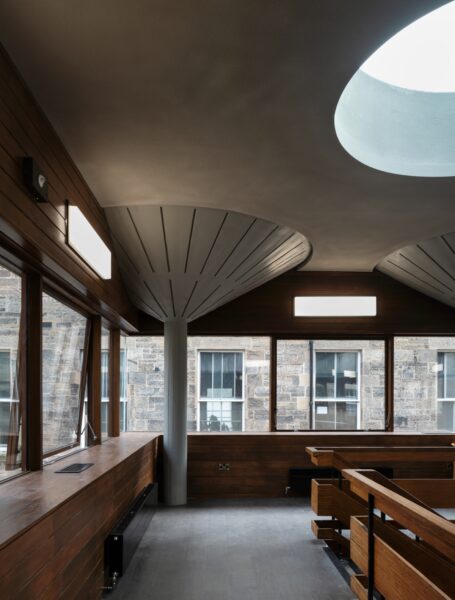
Within the Modernist extension, boarded windows were reopened and replaced with double-glazed units, insulation was introduced behind reinstated timber linings, and rooflights were replaced to restore daylight while improving thermal performance. These measures address the poorest-performing areas of the building while preserving the defining character of the 1960s interiors.
Across the building, mechanical and electrical systems were comprehensively renewed, introducing improved ventilation, high-efficiency plant and intelligent lighting controls linked to a building management system. This enables zoned, demand-led operation suited to the building’s highly varied patterns of occupation.
A renewed student union
Teviot Row House accommodates thousands of students each day and supports a wide range of activity, from performances and debates to informal social use and student societies. The refurbishment ensures that the building can continue to support these functions while adapting to contemporary expectations of inclusivity, environmental responsibility and flexibility.
By working with the existing building rather than replacing it, the project preserves a significant cultural asset while reducing embodied carbon and extending the life of a complex historic structure. The result is a revitalised student union that remains authentic in character while equipped to serve future generations of students and the wider university community.
Project Info
Overview
The University of Edinburgh
Bristo Square, Edinburgh
4,700 m²m2
December 2025
Consultants
University of Edinburgh
Arup
Harley Haddow
Astute Fire
Thomson Bethune
Principal CDM
GRAHAM
David Barbour
More projects

Glasgow Caledonian University
A new heart of the campus, revitalised by a new entrance setting, a landscape and a colonnade of connections

Martyrs Kirk
Adaptation of a valued church into postgraduate study space

Architecture Studios
A vertical accentuation of brick piers and chimneys enclosing flexible practical learning spaces

Campus Central
A campus landmark to transform the social core of the University of Stirling

The Glasgow School of Art Mackintosh Building Restoration
2015 restoration of the Mackintosh building at the Glasgow School of Art